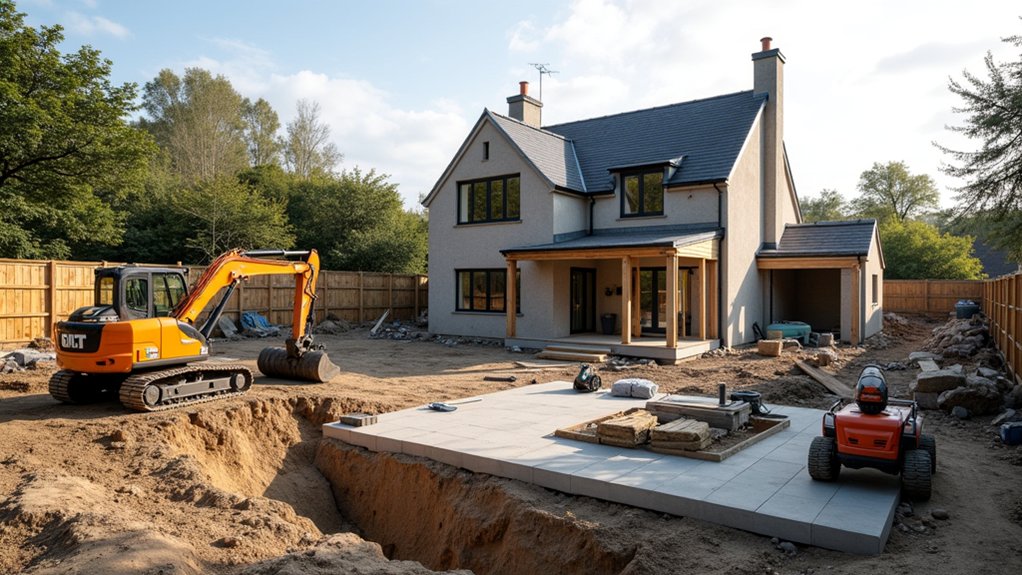
Planning a house extension or structural renovation means hiring machinery that suits your site, materials and programme. You’ll often need mini diggers for clearance and trenching, concrete mixers for reliable foundations, access platforms for safer work at height, and lifting equipment for heavy materials. The right choice can reduce labour, prevent damage and keep costs under control—but selecting the wrong machine could create access problems, delays and unnecessary risks.
Key Takeaways
- Hire a compact excavator or mini digger for clearing, foundation removal, trenching, and restricted-access work.
- Choose a concrete mixer matching foundation volume, access conditions, and the structural engineer’s specified concrete requirements.
- Use MEWPs, scissor lifts, or powered access towers for safe, efficient work at height.
- Select hoists, telehandlers, or lifting equipment according to load weight, lifting height, ground conditions, and access.
- Compare complete hire costs, including delivery, fuel, operators, insurance, attachments, and potential weather-related delays.
Start With Excavators and Mini Diggers
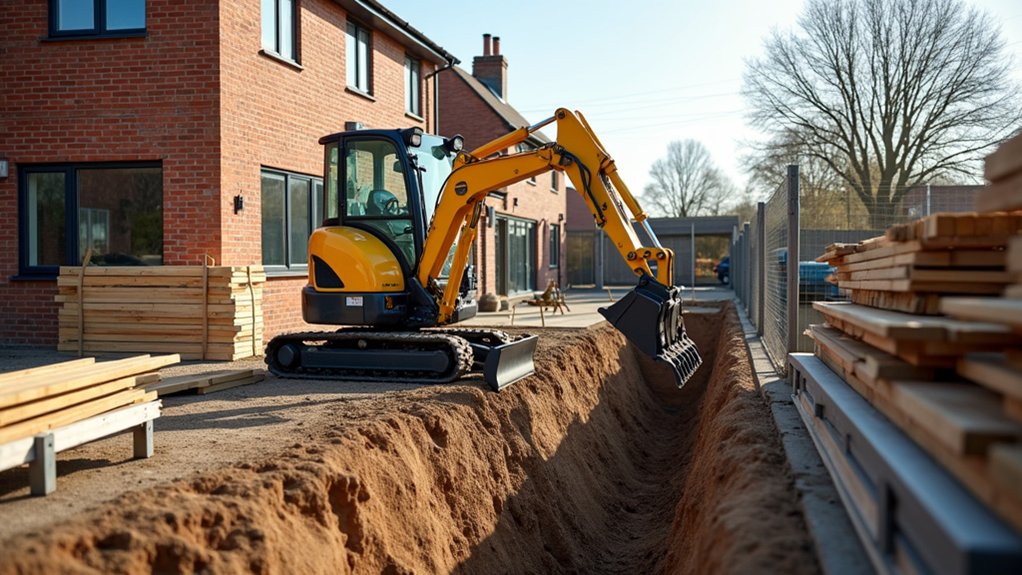
Start your house extension with an excavator or mini digger to clear the site, remove foundations and prepare trenches for footings and services.
Choose a compact model where access is restricted, checking width, ground conditions and lifting capacity before hiring.
You’ll need a competent operator, or you must arrange suitable training and insurance if you’ll operate the machine yourself.
Confirm construction permits and planning requirements, and contact utility providers before digging.
Mark service routes, install barriers and keep people away from the working radius to maintain site safety.
Use a tracked mini digger on soft ground and avoid overloading unstable edges.
Your hire company can supply buckets, breakers and grading blades, but inspect attachments and controls daily.
Plan spoil storage, waste removal and delivery access before work begins.
Hire Concrete Mixers for Foundations
Once trenches are prepared, hire a concrete mixer suited to the volume and access available on your extension site. For small foundations, a towable drum mixer usually offers sufficient capacity and manoeuvrability.
Larger pours may justify a high-capacity mixer, particularly when you need to maintain a continuous supply before concrete begins setting. During foundation planning, calculate the required volume accurately, allowing for waste, and confirm the mixer can reach the pour area without damaging paving or obstructing neighbours.
Material selection matters too: follow your structural engineer’s concrete specification, including strength, aggregate size and water ratio. Arrange delivery, electrical supply or fuel before work starts, and check who’ll load, mix and discharge it.
Keep the mixer on stable ground, follow the hire company’s instructions, and clean it thoroughly after use.
Use Access Platforms for Work at Height
With the foundations underway, plan safe access for tasks above ground level. Hire a suitable access platform, such as a mobile elevating work platform (MEWP), scissor lift or powered access tower, rather than relying on ladders for prolonged work.
Choose equipment that suits your reach, ground conditions and available space, and ask the hire company for operator familiarisation.
Before use, complete safety precautions, including checking barriers, emergency controls, outriggers and the ground’s stability. Keep people away from the operating area, secure tools, and never exceed the platform’s rated capacity.
You’ll need trained operators and appropriate PPE, including a harness where the manufacturer requires one. Follow the site risk assessment and Work at Height Regulations 2005.
Carry out daily inspections, report defects immediately, and arrange equipment maintenance through the hire provider.
Choose Lifting Equipment for Heavy Materials
When heavy materials need moving around your extension project, choose lifting equipment that matches the load, lift height, ground conditions and available access.
A material lift, hoist or telehandler can move bricks, blocks, steelwork and roof components more safely than manual handling. Check the equipment’s safe working load, reach and operating requirements before hiring, and never exceed its rated capacity.
Position lifting equipment on firm, level ground, keeping clear of excavations, scaffolding and overhead cables. You’ll need suitable exclusion zones, competent operators and, where required, a qualified person to supervise lifting operations.
Inspect slings, forks, chains and hooks before use, and report defects immediately. Good machinery maintenance supports reliable operation, while planned lifting protects structural safety and reduces injury risks.
Follow the hire company’s instructions and UK lifting regulations.
Match Machinery to Your Site and Budget
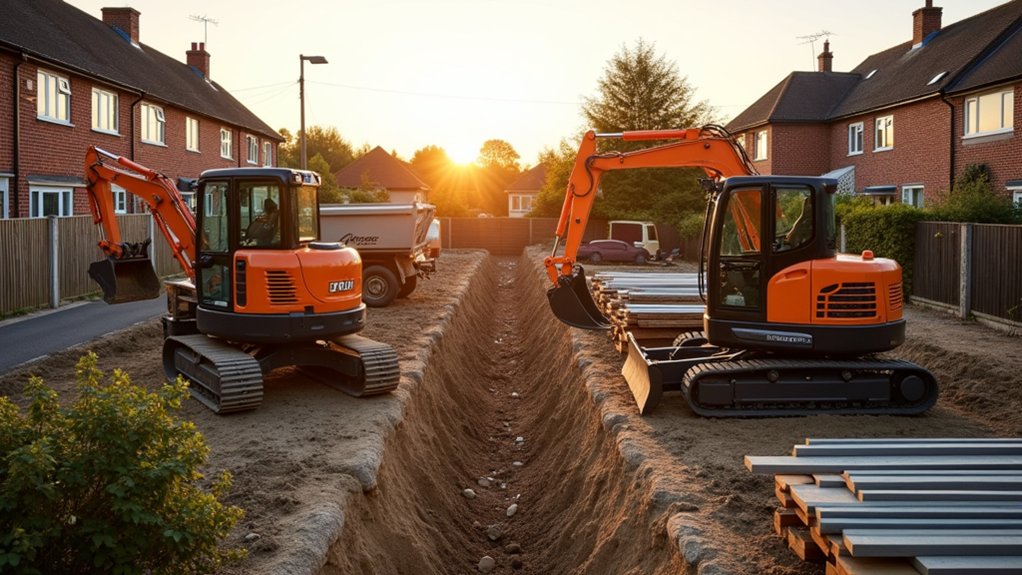
The right machinery must suit both your site and your budget, not just the task. Before hiring, assess access, ground conditions, overhead services and available working space.
A compact excavator may handle a tight rear extension site, while a larger model could damage paving or require costly traffic controls. Compare hire rates with delivery, fuel, operator and insurance charges.
Careful Budget planning helps you avoid paying for capacity you won’t use, but don’t compromise safety or productivity. Ask the hire company about attachments that can complete several jobs, reducing separate hire periods.
Check each machine’s inspection records and agree who’ll handle machinery maintenance, repairs and daily checks. Book early, particularly during busy spring and summer periods, and confirm cancellation terms.
Keep a contingency for delays, weather and unexpected ground conditions.
Conclusion
Choose machinery sensibly and your extension might finish before the neighbours’ complaints do. Hire a mini digger for tight access, a reliable mixer for foundations, and a suitable platform or telehandler for safer work at height and heavy lifting. Don’t hire the biggest machine simply to impress the street: match equipment to your ground, access, programme and budget. Plan early, check UK safety requirements, and use trained operators. Your project—and your bank account—will thank you.
About the Author


