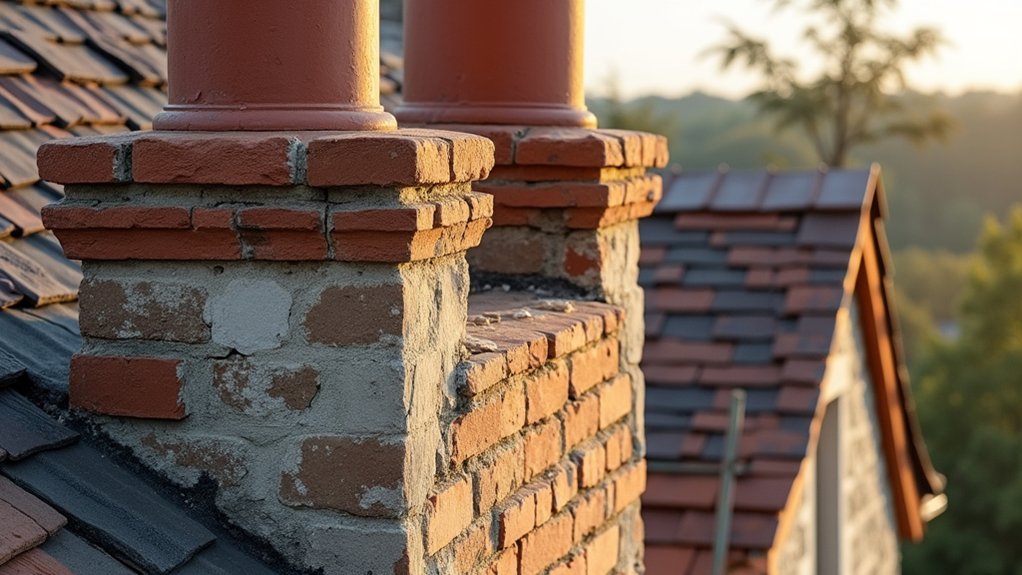
Older chimneys often fail from hidden flue damage and incompatible mortar, not just loose bricks. Before you rebuild, inspect the stack, fireplace, and flue thoroughly, then check local building rules and conservation requirements. You’ll need materials that match the original construction, careful masonry techniques, and a suitable liner to protect the structure. The right sequence matters, because one overlooked defect can compromise safety, weather resistance, and the building’s historic character.
Key Takeaways
- Inspect the chimney from hearth to cap, documenting structural defects, flue condition, dimensions, obstructions, and historic features.
- Confirm building regulations, heritage protections, conservation requirements, permits, inspections, access arrangements, and weatherproofing plans before work begins.
- Select matching reclaimed or handmade bricks, compatible breathable mortar, and a flue liner rated for the appliance, fuel, and temperature.
- Rebuild carefully in matching courses and bond, preserving architectural details while installing the liner according to manufacturer specifications.
- Complete professional smoke, leak, and draw tests, then weatherproof appropriately, install safe ventilation and carbon monoxide alarms, and schedule maintenance.
Inspect the Chimney and Flue for Damage
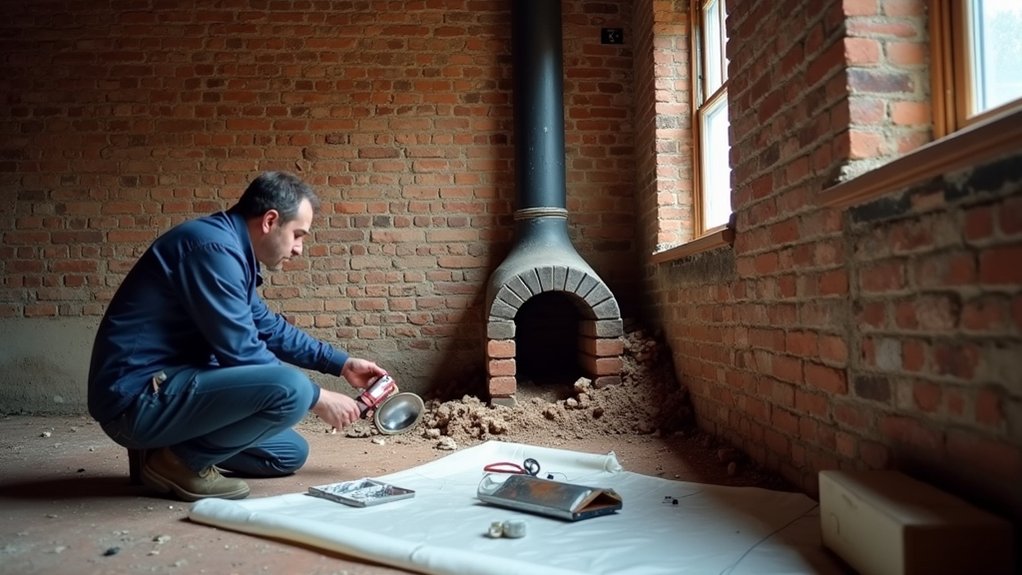
Before rebuilding, inspect the chimney and flue from the hearth to the cap, looking for cracked bricks, open joints, leaning sections, water damage, and signs of smoke leakage.
Check the firebox, throat, smoke chamber, and liner for loose masonry, tar deposits, corrosion, or obstructions. Use a torch and mirror, then arrange a camera survey if visibility is limited.
Tap suspect bricks lightly; a hollow sound can indicate hidden failure.
Record dimensions, construction details, and areas needing careful dismantling, preserving sound historic fabric wherever possible.
Examine the crown, flashing, pots, and rain caps for failed seals and frost damage.
Note how repairs affect chimney aesthetics, and document existing materials before considering flue material selection.
Don’t assume a clean exterior means a safe passage: internal cracks and gaps can remain concealed.
Check Regulations and Plan the Rebuild
With the chimney and flue condition recorded, check the regulations that govern the rebuild before removing masonry or ordering materials. Contact your local building control office to confirm structural, fire-safety, ventilation, and height requirements. Regulation compliance may require calculations, notices, inspections, and certificates, particularly where you’re altering a flue or changing its appliance connection.
Check whether the property sits in a conservation area, is listed, or has other heritage protections. Planning permissions may apply to changes affecting the roofline, chimney profile, or historic fabric. Consult the conservation officer early, and retain photographs and measured drawings for the record.
Prepare a clear sequence of work, access arrangements, temporary weather protection, and a realistic budget. Agree responsibilities with your contractor, arrange inspections at required stages, and document every decision before construction begins.
Choose Compatible Bricks, Mortar, and Liners
Choose bricks that match the existing chimney in size, colour, texture, and durability, rather than relying on appearance alone.
Historical brick matching should account for handmade irregularities, weathering, and regional manufacture. Salvage sound bricks where possible, but don’t reuse spalled or salt-damaged units.
Your Mortar composition selection matters just as much. Match the original mortar’s strength, permeability, colour, and joint profile. In many older buildings, a breathable lime mortar suits soft historic brick better than hard cement.
Avoid creating rigid joints that force moisture through the masonry and accelerate damage. Ask a conservation specialist to test samples when the original mix isn’t clear.
Select a liner rated for your appliance, fuel, flue temperature, and chimney dimensions. Confirm material compatibility with local requirements, and choose a system that preserves ventilation and allows safe inspection.
Rebuild the Chimney and Install the Flue
Rebuild the chimney in stable, even courses, keeping its footprint, bond, alignment, and original detailing consistent with the existing masonry. As you lay each course, tool joints to match the surviving work and check plumb frequently.
Preserve corbels, caps, pots, and other features that define the building’s chimney aesthetics; replacing them with generic details can undermine historical preservation.
Install the approved flue liner as the masonry rises, following the manufacturer’s clearances, joints, and orientation requirements. Keep the liner centered, supported, and separated from the brickwork where specified, allowing room for insulation or movement.
Connect it carefully to the appliance or register plate, and form clean openings for access components. Coordinate every connection with the existing stack, so the rebuilt assembly remains structurally coherent and visually authentic.
Test, Weatherproof, and Maintain the Chimney
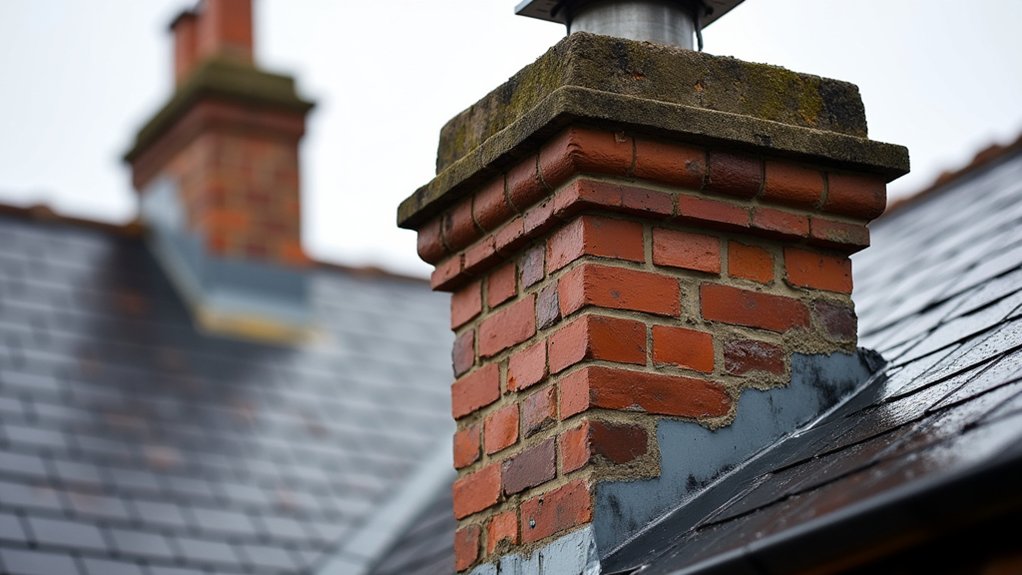
After the masonry and liner are complete, test the chimney before putting it back into service. Arrange a qualified professional to carry out a smoke test, check for leaks, and verify safe draw.
Confirm that your Flue material selection suits the appliance, fuel, and conservation requirements.
Inspect the terminal, flashing, mortar joints, and pots, then weatherproof vulnerable areas with compatible, breathable materials. Don’t seal historic masonry with impermeable coatings; trapped moisture accelerates decay.
Preserve Chimney aesthetics by matching reclaimed or carefully weathered bricks, tiles, and mortar rather than applying conspicuous repairs.
Fit a suitable cap or rain guard without restricting ventilation, and install carbon-monoxide alarms indoors.
Schedule annual sweeping, inspect after severe weather, and monitor staining, cracking, damp patches, or unusual smells.
Keep records, and address defects promptly before they compromise safety or heritage fabric.
Conclusion
With careful inspection, approved planning, compatible materials, and precise workmanship, you can rebuild an older property’s chimney without compromising its character. Install the flue correctly, test every joint and draft, and weatherproof the structure with breathable materials. Don’t cut corners: small defects can become serious hazards. Keep maintenance on your schedule, and your chimney will stand the test of time, protecting both your home and its heritage for years to come.
About the Author


