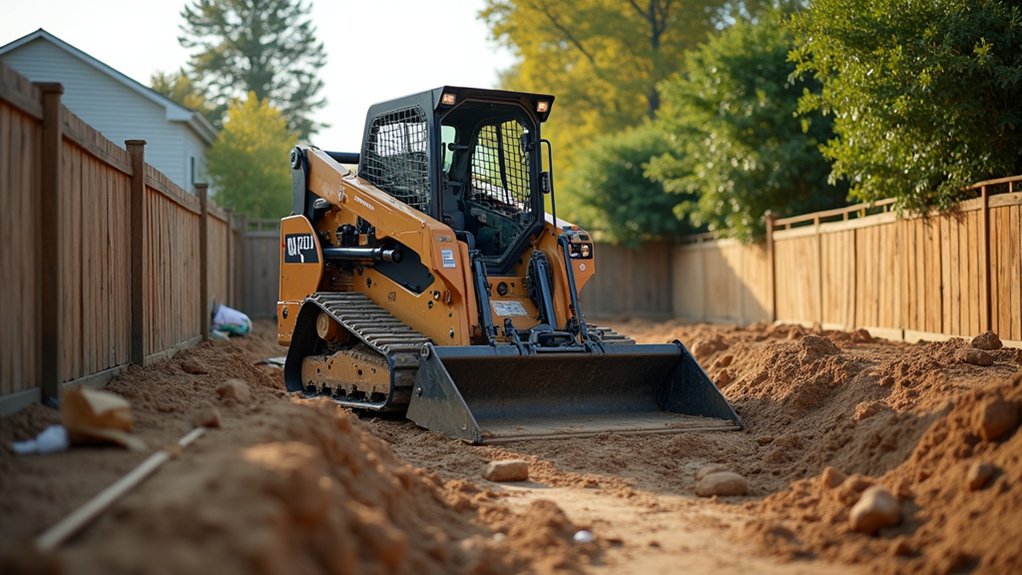
If your domestic construction project has a few practical complications, hiring a skid steer loader could make the work more manageable. You’ll gain versatile equipment, reduce manual labour, and access attachments for digging, grading, and lifting, but rental fees, surface damage, site access, operator competence, and local safety requirements still matter. Before you book one, consider where it will work safely, what it will cost overall, and which attachment could prevent an expensive mistake.
Key Takeaways
- Pro: Skid steers efficiently handle digging, lifting, loading, trenching, demolition, and landscaping tasks on domestic construction sites.
- Pro: Hiring avoids ownership costs, including depreciation, storage, major repairs, and long-term maintenance commitments.
- Pro: Interchangeable attachments improve versatility, but hydraulic flow, locking systems, and machine compatibility must be confirmed beforehand.
- Con: Rental costs can increase through fuel, delivery, cleaning, damage charges, extended hours, wet-weather delays, and older-machine inefficiency.
- Con: Large or poorly operated machines may damage lawns, driveways, gates, utilities, or neighboring property, requiring careful access and safety planning.
When Hiring a Skid Steer Makes Sense
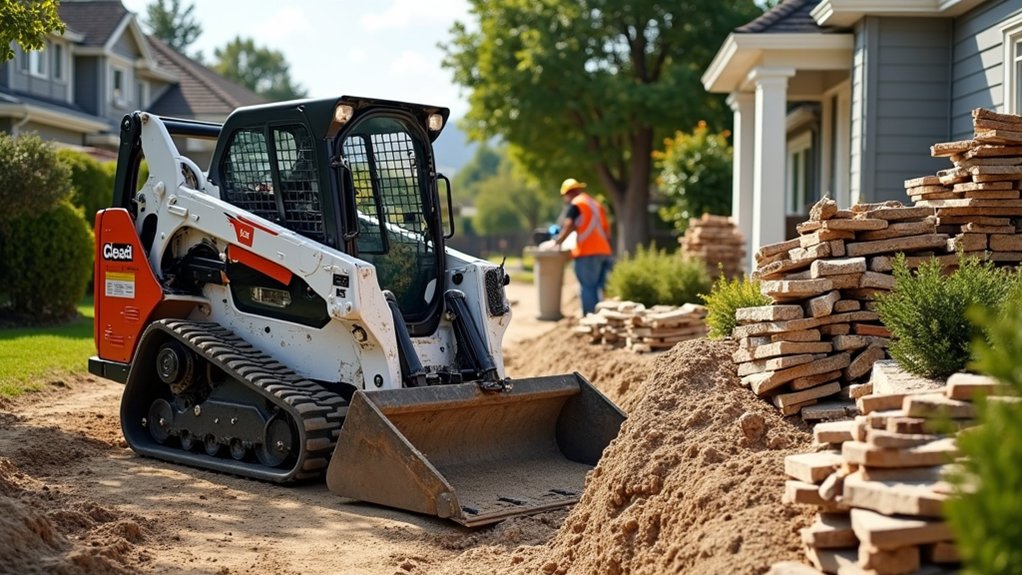
A skid steer makes sense when your domestic construction job involves tight access, limited space, or frequent material handling. You’ll find it particularly useful for moving soil, aggregate, spoil, pallets, or demolition waste around extensions, driveways, and garden renovations. Its compact frame can work where a larger loader can’t, provided you’ve checked gate widths, ground conditions, overhead clearance, and access for delivery.
Choose a rental when the workload is substantial enough to justify transport, fuel, and operator time, but not frequent enough to warrant ownership. Landscaping tasks, trench backfilling, grading, and site preparation often suit a skid steer’s attachments and manoeuvrability.
Before hiring, confirm local rules for highway delivery, noise, operating hours, underground services, and pedestrian separation. You’ll also need competent operation and appropriate insurance for your site.
The Main Benefits of Skid Steer Rentals
Skid steer rentals give you flexible access to compact, capable equipment without the purchase price, storage requirements, or long-term maintenance of ownership. You can select a machine sized for your driveway, garden, renovation, or small excavation project, then return it when the work ends.
Equipment versatility adds value: rental yards commonly offer buckets, forks, augers, trenchers, and grapples, so you can match attachments to your scope instead of buying each tool.
Predictable rental pricing also helps you budget without depreciation, insurance, or repair surprises.
Ask the supplier about Maintenance strategies, including inspection records, fluid checks, and breakdown support.
Before delivery, confirm ground conditions, access width, overhead clearance, and local rules for noise, hours, and permits.
You’ll also receive safety guidance and required operator information, helping you plan responsibly on residential sites.
How Skid Steers Save Time and Labor
When domestic construction tasks involve repeated digging, lifting, grading, or material moving, a skid steer can help you complete them with fewer workers and less manual handling. You can switch attachments quickly, so one compact machine handles excavation, backfilling, brush clearing, and final grading without repeated setup.
Its tight turning radius helps you work around houses, fences, and narrow access points, reducing delays caused by repositioning larger equipment. You’ll also improve Material efficiency by loading precise quantities, limiting spillage, and reusing suitable soil or aggregate on site.
Plan travel routes before work begins, and keep loads stable to protect workers, structures, and underground services. Follow local permits, exclusion zones, and operator-training requirements.
Efficient operation can reduce fuel use and Environmental impact while keeping your project moving safely.
Rental Costs and Other Financial Drawbacks
You’ll need to weigh daily rental rates against your project timeline, as extensions can quickly increase the bill.
Don’t overlook operating costs such as fuel, delivery, attachments, cleaning, and damage charges.
Check the hire agreement and local site requirements carefully so you’re not caught by unexpected fees or compliance costs.
Daily Rental Rates
Daily rates for hiring a skid steer loader can vary widely with the machine’s size, attachments, hire period, and local demand, so check several suppliers before committing.
You’ll often pay more for high-capacity models or specialist attachments, while weekly bookings may reduce the effective daily rate. Ask whether the quoted price includes delivery, collection, and operator training, and confirm the minimum hire period.
Review the rental agreement carefully: equipment maintenance should remain the supplier’s responsibility, but you’ll need to report defects promptly and use the machine correctly.
Check the insurance requirements before signing, including public liability, damage cover, and any excess you must pay.
Local hire firms may request proof of competency and site details, particularly where access, ground conditions, or planning restrictions could affect safe operation.
Hidden Operating Expenses
The quoted hire rate is only part of the cost of using a skid steer on a domestic project. You’ll also pay for delivery, collection, attachments, fuel, and any extra hours beyond the agreed rental period. Check whether the supplier charges for weekends, cleaning, damage, or wet-weather extensions before signing.
Fuel efficiency can vary sharply with operator experience, ground conditions, and attachment choice, so budget realistically rather than relying on headline figures. You may also face maintenance costs if you hire an older machine or cause avoidable damage.
Ask who covers punctures, track wear, hydraulic leaks, and breakdown call-outs. Local noise, access, and waste-management requirements can add costs if work delays neighbours or obstructs a public road.
Keep invoices, inspect the loader, and confirm insurance responsibilities in writing.
Access, Surface Damage, and Safety Risks
Before hiring, you’ll need to confirm the loader can reach the work area without damaging gates, driveways, lawns, or neighbouring property.
You should also protect vulnerable surfaces and check local access or noise requirements.
Make sure the operator is trained, uses required safety controls, and keeps people clear of the machine’s operating zone.
Site Access Challenges
Although a hired skid steer can simplify domestic construction, you’ll need to confirm that it can reach the work area without damaging gates, paving, landscaping, or underground services. Measure the machine, attachments, turning space, and gate openings before delivery.
For garden landscaping or tree removal, check whether narrow side access, slopes, steps, or overhead branches will restrict operation. Ask your hire company about compact models, removable attachments, and suitable access mats, but don’t assume these solve every problem.
Contact utility providers before digging, and follow local requirements for protecting footpaths, roadways, and neighbouring property. You’ll also need a clear route for delivery vehicles and a safe exclusion zone once work begins.
If access remains uncertain, arrange a site assessment with an experienced operator before hiring.
Surface Damage Risks
Even when access is adequate, a skid steer’s tyres or tracks can scar lawns, crack paving, rut soft ground, and damage driveways, particularly during tight turns or wet conditions. Protect surface integrity by checking ground conditions before work, keeping loads within the machine’s limits, and choosing rubber tracks or wider tyres where appropriate.
Ask the operator to use temporary ground-protection mats across lawns, block paving, and recently landscaped areas. Mark drainage covers, irrigation lines, edging, and fragile surfaces clearly, then agree a defined travel route.
After rain, postpone work if machinery could compact soil or create deep ruts. You’ll also need to manage mud and sediment so they don’t enter drains or public roads; local environmental rules may require controls.
Photograph existing surfaces and confirm repair responsibilities in writing before hiring.
Operator Safety Concerns
Operator safety depends on more than keeping clear of the loader: you’ll need a competent, properly trained operator, a clear work zone, and controls suited to the site. Before work starts, confirm safe access, secure steps and handholds, and require three-point contact. Keep children, visitors, and tradespeople outside the exclusion zone, following the hire company’s instructions and relevant workplace-safety rules.
Check ground conditions, slopes, overhead services, and underground utilities. A skid steer can mark paving, damage lawns, or become unstable on soft or uneven surfaces, so use suitable attachments and ground protection.
Operator fatigue increases reaction times; schedule breaks and avoid rushed manoeuvres. Report hydraulic leaks, faulty alarms, worn tyres, or poor visibility immediately. Don’t attempt repairs unless authorised: maintenance challenges can create serious risks.
A daily inspection and clear communication protect your crew and property.
Choosing the Right Skid Steer and Attachments
Choosing the right skid steer starts with matching its rated operating capacity, lift height, and size to your site and workload. For tight domestic sites, a compact model may reduce ground damage and improve access, while larger machines handle heavier materials efficiently.
Check the manufacturer’s load charts, not just advertised horsepower, and confirm the machine suits local access, slope, and ground conditions.
Select attachments for the task: buckets for spoil, forks for pallets, augers for posts, or trenchers for service runs. Verify compatibility, hydraulic flow, and attachment locking systems before work begins.
Your hire agreement should cover Equipment maintenance, inspections, and replacement procedures.
Make sure operator training includes the chosen attachments and follows applicable workplace-safety requirements.
A local hire specialist can help you match specifications without overspending.
Should You Hire a Skid Steer for Your Project?
If your domestic project involves repeated lifting, loading, digging, or material movement, hiring a skid steer can save time and reduce manual handling. It’s usually worthwhile for driveways, landscaping, trenching, demolition, and substantial excavation, particularly when tight deadlines or limited labour affect your plans.
For a small, one-off task, equipment hire, delivery, and operator costs may exceed the benefits. Compare the quoted rate with your project’s duration, access, ground conditions, and attachment needs.
Ask whether the hire includes an experienced operator, as unsafe use can damage property or breach local site requirements. Confirm insurance, underground-service checks, noise limits, and any permit obligations before work starts.
Review the machine’s Skid steer maintenance records, and choose efficient equipment to limit fuel use and Environmental impact. Schedule responsibly and follow waste-disposal rules.
Conclusion
Hiring a skid steer can make your domestic project faster, cleaner, and more affordable—if you plan carefully. Coincidentally, the same compact design that helps you reach tight spaces can also increase surface damage and safety risks. Check local access rules, underground services, ground conditions, and rental insurance before booking. Choose suitable attachments, confirm every fee, and use a competent operator. If the machine matches your site and workload, hiring can be a practical, cost-effective choice.
About the Author


